Two Drinks or Ten: What the Science Actually Says About Alcohol and Erectile Function
Ask most American men what they know about alcohol and sexual performance, and you will likely get one of two responses. Either a dismissive shrug — "a drink or two gets me in the mood" — or a resigned acknowledgment that heavy drinking causes problems. Both responses contain a kernel of truth. Neither tells the full story.
The actual relationship between alcohol consumption and erectile function is considerably more layered, dose-dependent, and individually variable than popular understanding suggests. For men managing erectile dysfunction, or simply trying to understand how their habits affect their sexual health, a more precise picture is worth having.
The Dose Makes the Difference
Alcohol does not affect the body in a uniform way regardless of quantity. This seems obvious when stated plainly, yet the nuance is frequently lost in public health messaging that collapses all drinking into a single cautionary category.
At low doses — generally defined as one to two standard drinks — alcohol produces a mild central nervous system depressant effect that reduces anxiety and social inhibition. For men whose erectile difficulties are rooted primarily in performance anxiety or psychological tension, this modest reduction in psychological arousal can actually facilitate rather than impede sexual function. Some research supports the observation that minimal alcohol consumption modestly lowers the stress response that can interfere with erection initiation.
The picture changes meaningfully as consumption increases. At moderate-to-heavy levels — three or more drinks in a session — alcohol begins to exert direct physiological effects that are unambiguously counterproductive to erectile function. Vasodilation becomes excessive, nerve signal transmission slows, and the hormonal environment shifts in ways that inhibit both desire and physical response. The colloquial term "whiskey dick" exists because the phenomenon is common enough to have earned a name.
At chronic heavy drinking levels — sustained high consumption over months or years — the damage extends well beyond acute session effects. Long-term alcohol misuse is associated with peripheral neuropathy (nerve damage), liver dysfunction that disrupts hormone metabolism, and direct suppression of testosterone production. These are not reversible effects that resolve after a night's sleep.
What Happens Physiologically
To understand why alcohol affects erectile function at higher doses, it helps to understand the mechanics involved. Erection depends on a precisely coordinated sequence: psychological arousal triggers neurological signals, which cause the smooth muscle tissue in the penis to relax, allowing blood to fill the corpus cavernosum. The entire process requires intact nerve transmission, adequate vascular response, and sufficient testosterone-driven libido.
Alcohol at elevated concentrations disrupts each of these components. It slows nerve conduction velocity, meaning the neurological signals that initiate erection travel less efficiently. It causes systemic vasodilation — counterintuitively, this can actually reduce the localized blood pressure needed to achieve and maintain erection, even as overall circulation increases. It temporarily suppresses testosterone by interfering with Leydig cell function in the testes. And it depresses the central nervous system broadly, which includes the brain regions that process sexual arousal and pleasure.
The net result is a physiological environment that is poorly suited to reliable erectile function, regardless of psychological intent.
Does the Type of Alcohol Matter?
This question comes up frequently, and the honest answer is: somewhat, but probably less than most men assume.
The primary active compound in all alcoholic beverages — ethanol — is the same regardless of whether it arrives in a craft beer, a glass of bourbon, or a vodka soda. At equivalent doses of ethanol, the core physiological effects are comparable across beverage types.
That said, secondary compounds in certain beverages may have modest additional effects. Red wine contains resveratrol, a polyphenol with mild cardiovascular benefits that some researchers have associated with improved vascular function. However, the quantities of resveratrol in a glass of wine are generally too small to produce meaningful clinical effects, and any vascular benefit would be offset by the ethanol content at higher consumption levels.
Sugary mixers and cocktails can compound the picture by contributing to blood sugar spikes, which carry their own implications for vascular health over time. Carbonated mixers also accelerate alcohol absorption, meaning a vodka soda may produce faster impairment than the same measure of spirits consumed neat. For men monitoring their consumption carefully, these secondary factors are worth knowing.
Confidence Versus Chemistry
One of the more philosophically interesting dimensions of this topic is the genuine tension between alcohol's psychological effects and its physiological consequences. For many men, a drink or two genuinely does reduce the social and psychological friction that can make sexual initiation feel awkward or fraught. Inhibition reduction is real, and for men with mild performance anxiety, it can translate into improved experiences at low doses.
The difficulty is that this psychological benefit has a ceiling — and that ceiling arrives before the physiological costs do. Men who rely on alcohol to manage performance anxiety may find themselves gradually increasing their consumption to achieve the same anxiety-reducing effect, a pattern that carries both dependency risks and escalating physiological consequences for sexual function.
This is an important clinical consideration. Using alcohol as a consistent tool for managing sexual anxiety is, in most cases, treating a symptom while worsening the underlying condition. Men experiencing performance anxiety-driven ED are typically better served by addressing that anxiety directly — through therapy, communication with their partner, or consultation with a healthcare provider — rather than through a chemical workaround that degrades with use.
Alcohol and ED Medications: A Critical Interaction
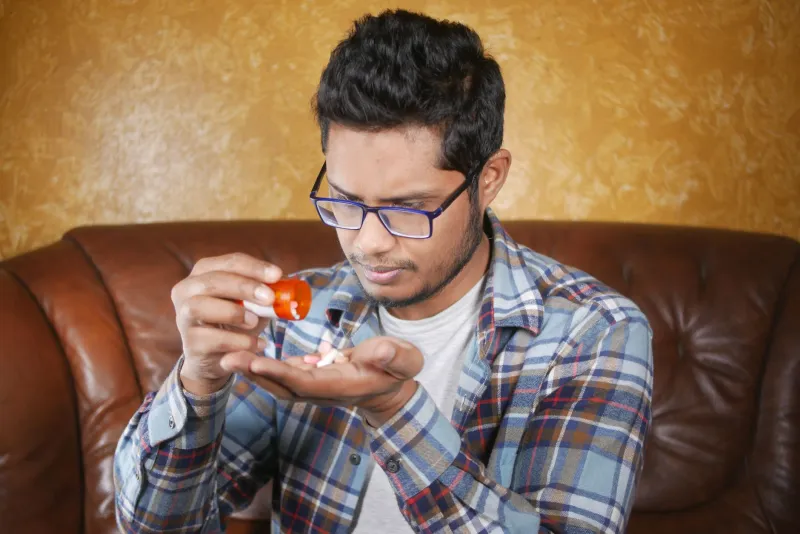
For men currently using prescription ED treatments, the interaction between alcohol and medication deserves specific attention. PDE5 inhibitors — the class of drugs that includes sildenafil, tadalafil, and vardenafil — work by enhancing blood flow to penile tissue. Alcohol, at higher doses, also causes systemic vasodilation.
Combining the two can produce additive vasodilatory effects, resulting in a significant and potentially unsafe drop in blood pressure. Symptoms can include dizziness, lightheadedness, fainting, and in severe cases, cardiovascular stress. The FDA and prescribing physicians consistently advise limiting alcohol consumption when using these medications.
Moderate consumption — one to two drinks — is generally considered acceptable for most healthy men using standard PDE5 inhibitor doses, but this threshold is lower than many men assume, and individual responses vary. Men with underlying cardiovascular conditions, or those taking nitrate medications for heart disease, face additional contraindication risks that make alcohol consumption particularly inadvisable.
If you are using prescription ED medication and have questions about how your drinking habits may affect both safety and efficacy, that is a conversation worth having with a licensed healthcare provider.
Making Informed Choices
The goal here is not abstinence advocacy. Many American men drink socially and moderately, and the evidence does not suggest that light, infrequent alcohol consumption poses a significant independent risk to erectile function in otherwise healthy men.
What the evidence does support is a clear-eyed understanding of where thresholds lie. One to two drinks on a given occasion is physiologically very different from four to six. Occasional social drinking is very different from nightly consumption. And alcohol as an anxiety management strategy is a different proposition entirely from alcohol as a social pleasure.
Men who are experiencing erectile difficulties and are also regular drinkers should consider an honest audit of their consumption patterns — not out of moral obligation, but because the physiological evidence suggests that alcohol, at sufficient quantities and frequencies, is a genuinely modifiable risk factor for ED. Reducing intake is one of the more straightforward lifestyle adjustments available, and for some men, it produces noticeable improvements in sexual function within weeks.
At CenforceUSA Health, we believe that informed men make better health decisions. Understanding the full complexity of how alcohol affects your body — rather than relying on simplified narratives in either direction — is a meaningful part of taking your sexual health seriously.